

Protecting your loved ones with a Will
Providing greater control over your assets and protection for those who matter.
A Will can help you put your financial affairs in order, plan your inheritance and ensure your wishes are known. Despite this, many people delay making one, often assuming it can be dealt with later. Without a Will, the law determines how your estate is distributed.
This may not reflect your wishes and could create further complications for those you leave behind. Writing a Will provides greater certainty,

Giving money or valuable possessions to loved ones
54% of over-55s have no record of gifts given in the previous seven years.
Giving money or valuable possessions to loved ones can be a generous way to provide support, but failing to keep track of those gifts could leave families facing an Inheritance Tax (IHT) headache later. New research shows that 54% of over-55s who have given a financial gift in the past seven years have kept no record of it[1].
The research found that only 13% have recorded

Five questions to ask yourself before retirement
Are you doing enough today to give yourself the freedom and choices you want tomorrow?
Retirement should be something to look forward to, not a source of financial anxiety. For many people, retirement can seem comfortably distant until, suddenly, it is not. Years of working, saving and paying into pensions can create the sense that everything will somehow fall into place.
The reality is that, without a clear plan, you could reach retirement and realise that the lifestyle you imagined

Could looking after grandchildren add to your State Pension?
A little-known National Insurance credit could reward you and give you a financial boost.
Providing regular childcare for grandchildren could do more than help your family. It could also help protect your State Pension entitlement through National Insurance credits. Grandparents who spend their time caring for grandchildren may be able to claim Specified Adult Childcare credits.
These are Class 3 National Insurance credits that can fill gaps in your National Insurance record and, in turn, build entitlement to the State
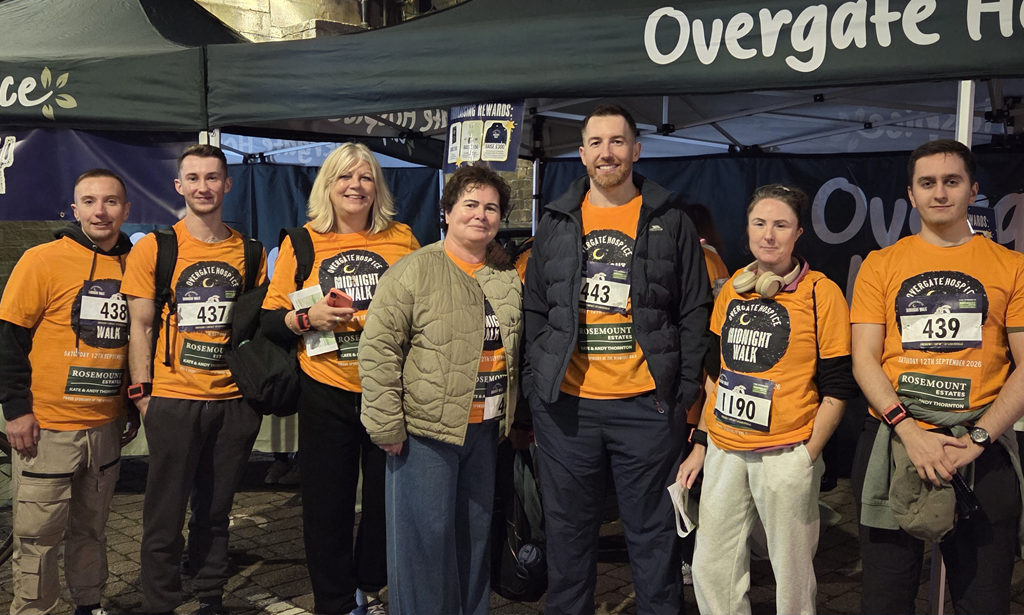
The Investing For Tomorrow team raise over £2,000 for Overgate Hospice
We did it! Toby and the team completed the 10-mile midnight challenge walk, raising £2,145 for Overgate Hospice who provides care for patients in Calderdale who have a terminal illness or a long term condition that cannot be cured.

Britons face Inheritance Tax confusion
How the gifting rules are leaving some families in the dark.
Inheritance Tax (IHT) can feel like a financial maze, and new research suggests many families struggle to understand the rules. Almost three in five (59%) UK adults admit they find IHT confusing, while only 6% describe their understanding as very clear, according to research[1].
That lack of confidence could have costly consequences. With tax thresholds frozen and recent policy changes expected to bring more families into the IHT net,

Bringing your pensions together
A long-awaited way to view your pension savings in one place is finally taking shape.
For years, savers have been promised a simpler way to track their pension savings. The concept is straightforward: instead of searching through old paperwork, logging in to multiple providers or trying to remember where a former employer’s pension scheme is held, you could eventually see your pension information securely in one place.

With the main taxes ruled out, attention is shifting to other revenue generators
As Chancellor John Healey delivers his first Autumn Budget on 28 October 2026, the government faces a difficult balancing act. Prime Minister Andy Burnham has committed to Labour’s manifesto pledge not to raise the main rates of Income Tax, National Insurance or VAT. However, the government also faces significant spending pressures and limited scope under its fiscal rules.
That does not necessarily mean taxpayers will avoid higher taxes. The Chancellor could consider wealth, investments, property, pensions and other sources of

Are you and your partner ready for retirement?
Why couples should talk about pensions and retirement plans.
Many couples plan their holidays, household budgets and major purchases together, yet pensions and retirement can be overlooked. Research suggests that fewer than one in five non-retired people have discussed their pensions or retirement plans with their partner, potentially leaving one person unaware of important financial decisions[1].

The 15 million workers heading for a retirement disaster
Future pensioners risk being poorer than today’s retirees unless action is taken.
Retirement may feel like a distant concern for many working people, but a stark new warning suggests millions of Britons could be heading towards a financial cliff edge in later life.
According to an interim report from the revived Pensions Commission, more than 15 million people are not saving enough for retirement, and a further 18 million are saving nothing at all[1]. The report warns that future pensioners

Callum passes his Level 4 Diploma in Regulated Financial Planning
We’re proud to announce that Callum, who first joined us on a college apprentice in 2022, has passed a major milestone to achieving full adviser status.

Why more families are losing wealth to Inheritance Tax and how to avoid it
Data shows families are paying unnecessary tax without planning ahead.
Planning for your death is unlikely to be a cheery task to tick off your to-do list, but as the rules keep changing and tax thresholds remain frozen, tackling it is more important than ever. Families paid a record £8.5 billion in Inheritance Tax (IHT) in the 2025/26 tax year, 3.6% higher than the £8.2 billion paid the previous year, according to HM Revenue & Customs.